Projects and Features
Buses go electric
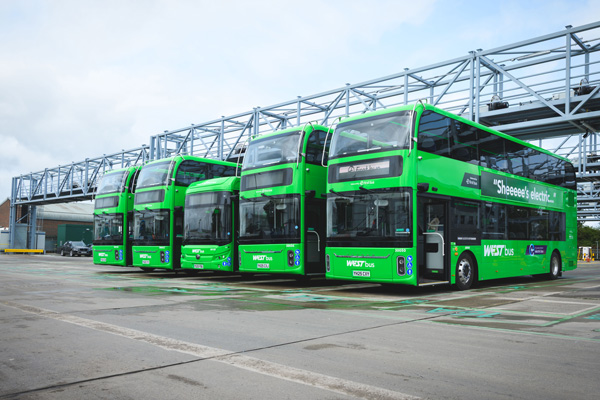
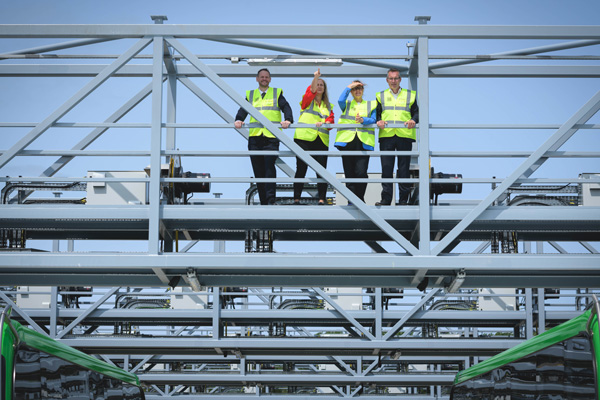
Five 70m-long steel gantries, supporting the all-important electric power distribution, are the centrepiece for a major sustainability-driven revamp at a Bristol bus depot.
FACT FILE
Hengrove Bus Depot, Bristol
Main client: First Bus
Main contractor: NG Bailey
Steelwork contractor: Four-Tees Engineers
Steel tonnage: 400t
One of the most advanced electric bus hubs outside of the M25, has been created in Bristol, following a £44 million revamp.
Aiming to make public transportation more sustainable, the investment at Hengrove (which includes £6.6 million of government funding secured by the West of England Mayoral Combined Authority through the government’s Zero Emission Bus Regional Areas (ZEBRA) scheme) will benefit passengers, whose numbers have increased in the region by more than five million in the past couple of years.
Electric buses provide benefits in terms of air quality and reduced carbon emissions, along with a better experience for both passengers and drivers.
With these benefits in mind, the First Bus Hengrove depot in the south of Bristol, has the capacity to operate 74 new electric buses following the installation of five overhead gantries that support the required power distribution plant, cabling and materials to charge the new fleet.
The new electric buses are now transporting more than 230,000 passengers per week on seven key services across the city.
With each bus saving about 75 tonnes of CO₂ each year – the equivalent to taking 54 cars off the road – the completion of the depot’s revamp marked another major milestone in the company’s commitment towards a zero emissions fleet by 2035.
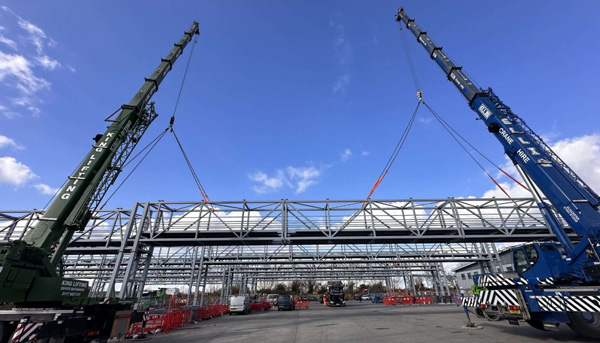
Working on behalf of main contractor NG Bailey, Four-Tees Engineers designed, fabricated and installed the five gantries, which required 400t of steelwork.
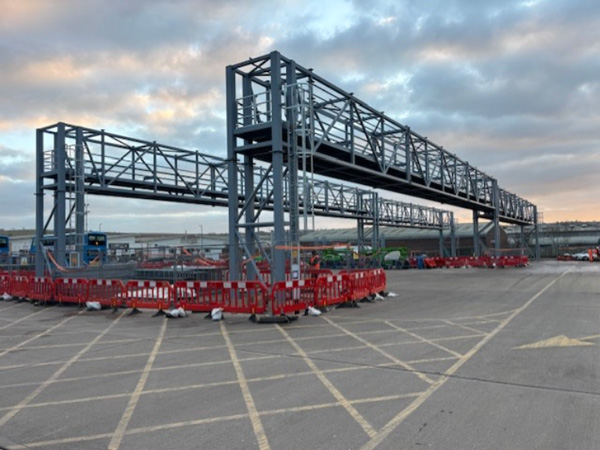
The steelwork includes supporting column towers, positioned at either end of the structures as well as at the midway point. The towers consist of four columns, braced together to form a rigid supporting structure.
For ease of transportation and erection, each of the five identical gantries was delivered to site in four pre-assembled 17.5m-long sections. The sections included the metal mesh flooring and some of the power equipment, which limited the amount of working at height that would need to be undertaken later in the project.
Alex Chilvers, Director for NG Bailey’s Electric Vehicle Infrastructure team, says: “The completion of the work at Hengrove marked a significant milestone in First Bus’s journey towards a zero-emission fleet and we are pleased to have played a pivotal role in delivering the infrastructure that makes this possible.
“We also worked hard to manage logistics and safety on site, ensuring all the work was completed while the site remained fully operational.
“If the UK is to meet its ambitious goals for decarbonisation, the adoption of EVs across public transportation is vital. Marking one of the largest EV gantry installations in the UK to date, this project will make a real difference to supporting not only First Bus’s wider sustainability goals, but the electrification of transport across the UK.”
The completed gantries allow cables to be lowered automatically to the vehicles below, minimising any potential loss of parking at the bus depot.
Hengrove Bus Depot is now said to be one of the largest EV gantry installations in the UK, and includes 26 Heliox Flex 180kW chargers with 77 reels and six Heliox Rapid 36kW all in one chargers, both of which deliver consistent power and maximum uptime, while reducing energy wastage.
Doug Claringbold, First Bus’ Regional Director for South and West, said: “Yet again we’re hitting more milestones in our electrification of our West of England fleet.
“Not only are we heading towards our Hengrove depot being 100% electric with the arrival of more buses this year, but we are also demonstrating a real commitment to going even further in our efforts to be more sustainable.
“Our company is committed to operating a fully electric fleet by 2035, with 25% of our fleet nationally now electric. By the end of this year almost half the West of England’s buses will be electric with about 750,000 of our passengers each week travelling on electric buses making bus travel greener, smoother and quieter for our customers, and contributing to better air quality for our towns and cities.”
Helen Godwin, the Mayor of the West of England, adds: “I promised to work with government to get our region moving. The first of over 250 brand-new, comfortable, electric buses for our region are a great start in a new chapter for the West of England, as we work with local councils and bus operators to deliver the best for the West.
“These new zero-emission buses are a total game-changer for bus passengers across the West Country, with phone chargers at every seat. I was glad to welcome the Minister to our region to see them today, and discuss with him how we can further improve bus services in our region including through the new powers promised by the Bus Services Bill.”
Summing up, Local Transport Minister Simon Lightwood says: “We’ve brought cleaner, quieter, and smoother bus journeys to Bristol and beyond – backed by £38 million in government funding and even more from private investment.
“Better buses help deliver our Plan for Change: creating green jobs, boosting the local economy, and building a more sustainable future.
“With our upcoming Bus Services Bill, passengers can expect more reliable services, stronger local control, and protection for vital routes.”