
Projects and Features
UK steel strategy
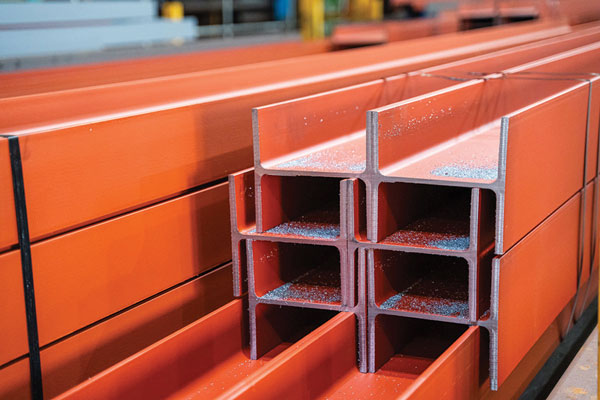
The constructional steelwork sector remains supportive of the UK Steel Strategy and a sustainable and financially viable steel production industry, but the ramifications of the proposed quotas and tariffs on our sector need to be urgently reviewed and amended, writes the BCSA’s Michael Sansom.
The long-delayed UK Steel Strategy was finally published in March. Although short on detail on the future of UK steelmaking, a central component is the introduction of new quotas and tariffs on steel imported into the UK after 1st July 2026.
UK steel quotas are not new. They were originally introduced in 2018 as EU safeguard measures in response to US tariffs. The UK then applied its own safeguard quotas from 2021 following Brexit.
Import quotas are currently in place for 15 steel product categories. Above these thresholds, a tariff of 25% is payable. The current safeguard quotas expire on 30th June.
UK steelwork contractors use open and hollow sections and plate to annually produce around one million tonnes of fabricated structural steelwork. The most significant product category is 17 (angles, shapes and sections). The current import quota for sections is 748kt annually, but this is set to be slashed by 83.5% on 1st July to just 123kt. The tariff on imports exceeding this quota will double to 50%.
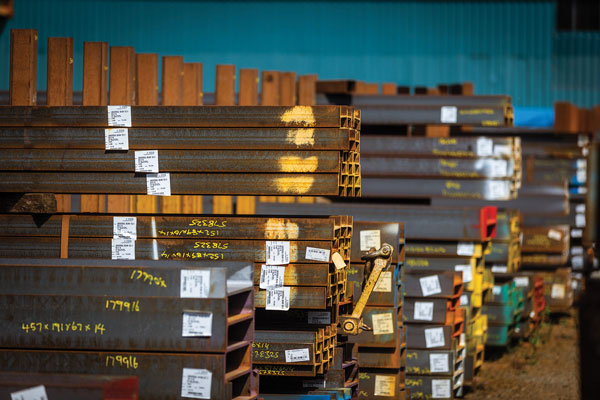
The purpose of the new quotas is clearly stated in the Steel Strategy; that it is ‘to protect domestic production’. Although laudable, this raises a number of challenges for downstream users of steel, including the constructional steelwork sector. These include:
- The short-term pressure it puts on British Steel (the only UK producer of heavy sections) to supply the increased demand for open steel sections.
- Availability of certain structural steel products (sizes and grades) not currently produced in the UK.
- The impact of delays, uncertainty and cost increases on construction projects and on structural steelwork’s competitiveness and the loss of market share relative to alternative structural materials.
- The difficulty of meeting ‘low-carbon’ building targets using BF-BOF steel and the cost implications of doing so using imported EAF steel. Some UK Government policies promote low-carbon (EAF) steel at the same time as promoting British-made (BF-BOF) steel. Different Government departments need to be more aligned on this.
The UK currently produces under four million tonnes of steel per year, less than we produced in the 1930s and a 90% reduction since the peak in 1970. As production has reduced, manufacturers of finished steel products have, by necessity, sought alternative markets and suppliers, to the point where the UK currently imports around 70% of the steel it uses. The 50-year decline in British steelmaking cannot be reversed in a single day and steel-using sectors need time to adjust and therefore, the proposed quotas need to be relaxed and/or phased-in to allow downstream sectors to adapt.
There is a further glaring omission from the proposed quotas; the exclusion of fabricated steelwork. This means that although imported sections will attract a 50% tariff, fabricated steelwork can be imported tariff-free from anywhere in the World! Not only does this mean a loss of steelwork fabrication jobs, the steel used will not have been produced in the UK; which is the primary objective of the import quotas. This is already happening on numerous construction projects under the current quotas and is likely to get significantly worse under the proposals. Other countries, notably the US, have closed this loophole by introducing a 50% tariff on all imported structural steelwork and the BCSA and Steel for Life are actively engaged with the Government to include fabricated steelwork within the UK import quotas.