Projects and Features
The benefits of galvanizing
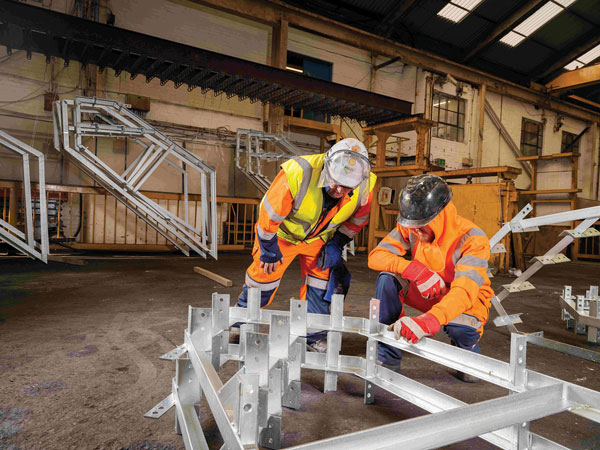
Galvanizing is recognised as a sustainable, durable, hygienic and highly economical solution for long-term steel protection.
With up to four per cent of the world’s GDP estimated to be lost to corrosion every year, the whole-life performance of steel remains a critical consideration for engineers and specifiers. To combat the damaging effects of rust and corrosion, hot-dip galvanizing is one of the most widely specified and trusted protective finishes, used across everything from major infrastructure and rail projects to small, intricate components such as fixings and fasteners.
Although the galvanizing process dates back to the mid-18th century, it has evolved significantly and today, it continues to be the finish of choice across engineering, construction, rail and architectural applications.
To protect steel from corrosion, items are first chemically cleaned to remove surface rust, oil and mill scale. Once prepared, they are fully immersed in a bath of molten zinc at temperatures of around 450°C. This ensures complete coverage of the steel, including internal surfaces, corners, narrow gaps and other hard-to-reach areas. After removal from the bath, the steel is left to cool, allowing a metallurgically bonded zinc coating to form.
This metallurgical bond is a defining characteristic of hot-dip galvanizing and underpins its long-term performance. The resulting coating provides exceptional resistance to corrosion and mechanical damage, offering robust protection during transport, storage and installation. In service, galvanized steel is able to withstand even the harshest environments for decades without requiring maintenance.
One of the most significant advantages of hot-dip galvanizing is its longevity. In many environments, galvanized coatings can deliver more than 70 years of maintenance-free protection. This dramatically reduces whole-life costs by eliminating the need for ongoing inspection, repair or recoating. It also limits operational downtime and reduces the need for replacement, making it an attractive option for projects where long-term value and cost certainty are essential. In addition to its long service life, galvanizing provides an exceptionally tough and durable finish.
Hot-dip galvanizing is also one of the few steel finishes defined by a British Standard, providing confidence in its reliability and performance. The process itself is uniform and well controlled, allowing consistent and predictable outcomes to be achieved time after time. This reliability, combined with the relative simplicity of the process, often enables short turnaround times and supports projects with demanding delivery schedules.
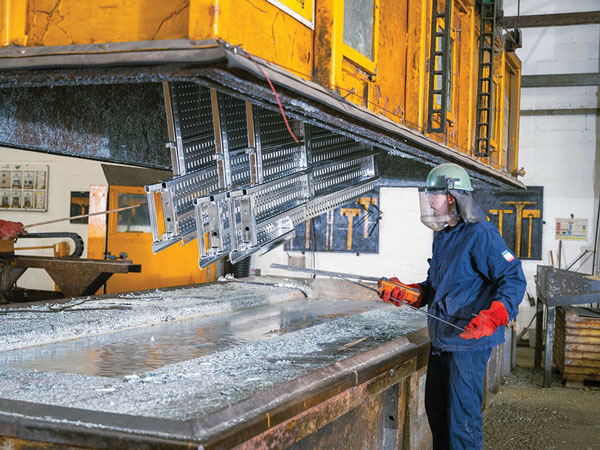
Sustainability is increasingly shaping material selection across the construction and engineering sectors, driven by environmental targets, regulatory requirements and growing client expectations. Hot-dip galvanizing is widely recognised as an environmentally responsible solution. Zinc is a non-ferrous material, meaning any unused zinc remains in the galvanizing bath and can be reused without degradation, resulting in minimal waste. At the end of its service life, galvanized steel can be recycled alongside scrap steel, or stripped and re-galvanized for reuse.
At Wedge Group Galvanizing, sustainability is embedded throughout operations. The company adopts a triple bottom line approach, balancing responsibility for people, planet and profit, while striving to exceed mandatory environmental compliance.
As part of its carbon reduction journey towards net zero, Wedge Group Galvanizing has made significant investments across its national network of 15 plants. These include the introduction of high-velocity Smart Firing technology, delivering carbon emission reductions of up to 35 per cent. Smart-fire furnaces continuously monitor and optimise temperatures, heat exchangers recover waste heat back into the galvanizing process, and insulated tanks retain heat more effectively. Low-temperature degreasers further reduce energy demand through the use of innovative chemical formulations.
Additional sustainability measures include the widespread adoption of electric manual handling equipment, such as forklift trucks, the phased introduction of Hydrotreated Vegetable Oil (HVO) as an alternative to diesel, reducing carbon usage by more than 80 per cent year-on-year, and the removal of lead and chrome from the galvanizing process.
Working closely with engineers and project teams across the UK, Wedge Group Galvanizing continues to support a wide range of steel applications. Whether the priority is long-term durability, reliability, cost efficiency or enhanced sustainability credentials, hot-dip galvanizing remains a proven, future-focused solution for protecting steel throughout its lifecycle.
Wedge Group Galvanizing Ltd is the UK’s largest hot-dip galvanizing organisation, with more than 155 years of experience and 15 strategically located plants nationwide. For more information, visit
www.wedge-galv.co.uk
Wedge Group is a
Gold sponsor of
Steel for Life