Weekly News
Light Steel Frame Association launches net zero guide
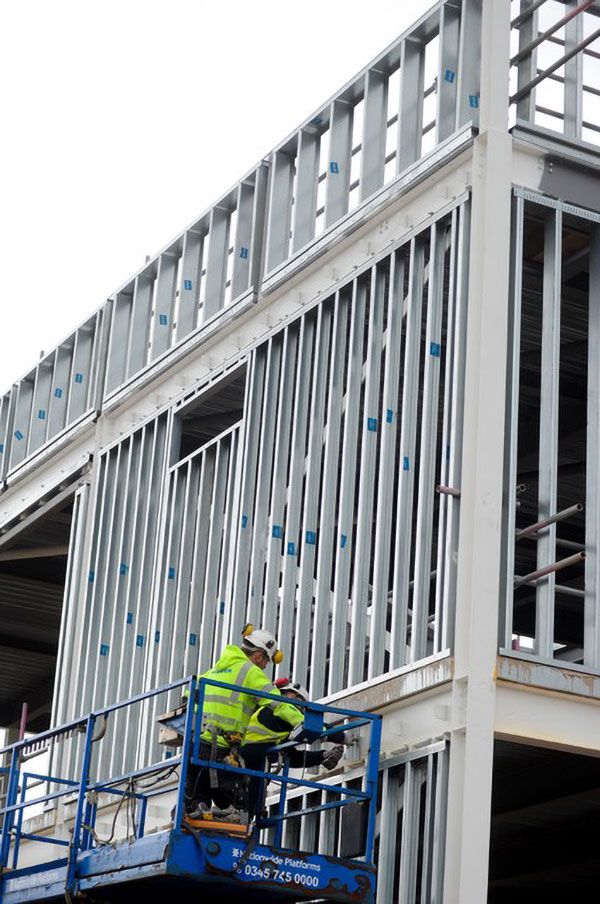
To help designers, developers and specifiers navigate forthcoming legislation, the Light Steel Frame Association (LSFA) has launched a new guidance document – The Cost-Effective Route to Net Zero.
The guide explores how light steel frame construction can support the industry’s journey to net zero through whole-life carbon reduction, circular construction principles and advances in low-carbon steel production.
It provides practical guidance for project teams looking to deliver high-performance, future-ready buildings while maintaining commercial viability.
The publication highlights the importance of considering carbon emissions across the entire lifecycle of a building – from material extraction and manufacture through construction, occupation, adaptation and eventual deconstruction.
Light steel frame is uniquely positioned to support this approach. As one of the world’s most recyclable construction materials, steel can be reused or recycled indefinitely without any loss of structural performance. Today’s light steel frame systems already contain between 60% and 90% recycled steel, while the steel industry continues to accelerate its transition towards low-carbon production through Electric Arc Furnace (EAF) technology powered by renewable energy.
The new Electric Arc Furnace at Port Talbot is expected to reduce on-site CO₂ emissions by up to 90%, marking a significant milestone in the UK’s transition to green steel – with production anticipated to commence around 2027.
The Cost-Effective Route to Net Zero guide is available as a free, open-source resource and can be downloaded from the LSFA document library at www.lsf-association.co.uk/document-library.