Projects and Features
Royal Borough gets leisure boost
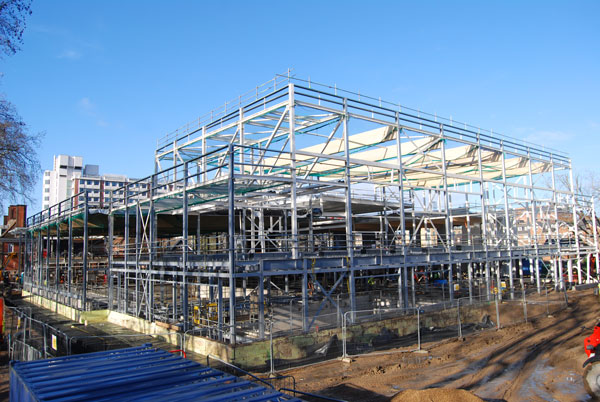
Structural steelwork, combined with glulam beams, has provided the design solution for a leisure centre stacked with sport and fitness facilities.
FACT FILE
Kingston Leisure Centre
Main client: Royal Borough of Kingston upon Thames
Architect: Roberts Limbrick
Main contractor: Pellikaan Construction
Structural engineer: Furness Partnership
Steelwork contractor: H Young Structures
Steel tonnage: 340t
Construction work is progressing on the £44.5 million Kingston Leisure Centre, a major investment that will deliver a modern, community-focused facility, while also acting as a regeneration catalyst.
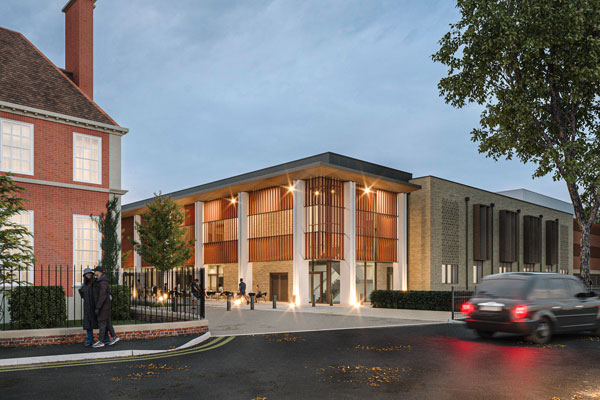
Located in the heart of Kingston town centre, the project has been carefully designed to respect and complement neighbouring heritage assets, including the listed Museum and Library buildings. It will also play a significant role in the borough’s long-term vision to enhance wellbeing, connectivity and inclusivity through high-quality, sustainable public infrastructure.
Working on behalf of the Royal Borough of Kingston upon Thames, Alliance Leisure is delivering the new facility, while Places Leisure will be the operator.
Alliance Leisure Development Director, Tom Fairey, says: “This is the largest project we’ve ever delivered through the UK Leisure Framework. With a clear brief from the council to deliver the highest quality facilities within a carefully managed budget, we’ve brought together a team with a proven track record of success.”
The main contractor for the steel-framed centre is Pellikaan Construction, a company that specialises in sport and leisure facilities. Its design and build ethos for such projects usually involves the use of steel, in order to achieve the speed of construction and the long column-free spans leisure and sports clubs require.
Commenting on the choice of steel, Roberts Limbrick Senior Associate Chris Kent, says: “The project was developed with a Whole Life Carbon Assessor to identify areas with the greatest carbon impacts, as well as opportunities for reuse or recycling of components.
“A carefully designed steel-frame provides the ability for steel sections to be easily reused at the building’s end of life.”
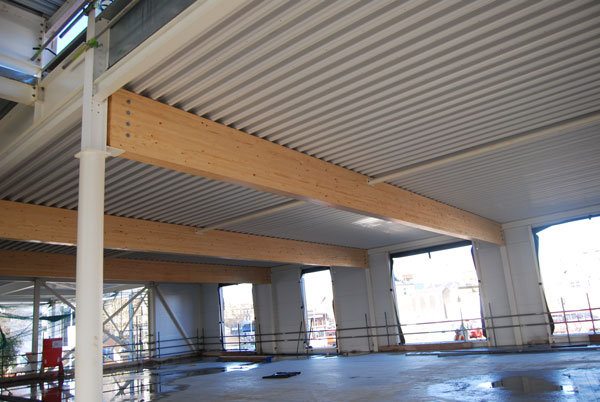
The main design difference from many other such schemes is the use of glulam beams to span over the centre’s 25m, eight-lane main pool (which includes a moveable floor), as well as the first-floor sports hall and fitness gym.
“Glulam beams, supported by steel columns, were chosen to form the roofs over these three areas for aesthetic reasons, and will be left exposed within the completed scheme,” says Pellikaan Construction Project Manager Mike Saddington.
Other facilities within the Kingston Leisure Centre include a 20m learner pool with interactive splash zone, health suite with sauna and steam room, group cycling studio, three activity studios, squash courts, soft play, and a café.
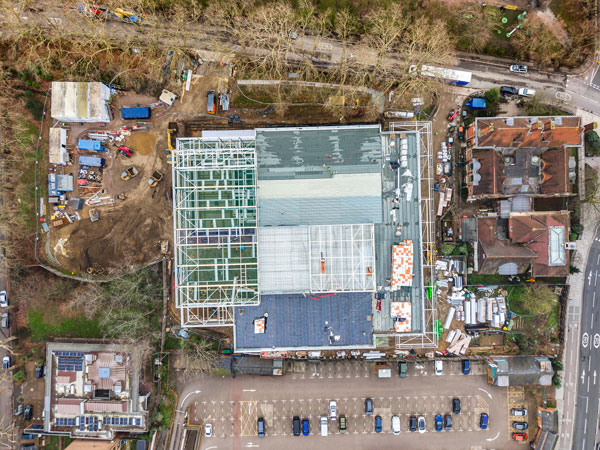
Work started on the project in May 2025, following the demolition of the previous leisure centre that occupied the site. Initially, the plot was levelled out, the crushed material left on site following the demolition was recycled and then a vibro compaction ground improvement process was undertaken. This was followed by the installation of shallow pad foundations, and the pool shell construction, in preparation for the erection of the steelwork.
Occupying the majority of the site, the steel frame was erected in a sequential programme, working west to east, with the final elements to be lifted into place, located close to the site’s delivery entrance. For programme efficiency, the project’s precast lift shaft, which sits in the middle of the frame, was installed before steelwork began, as it would have been difficult to lift it into place once the surrounding steel was in.
The steel frame forms a two-storey structure, with as many different facilities as possible, stacked up within the available footprint.
In this way, the aquatic facilities are on the ground floor, with the majority of the other spaces located at first-floor level.
The main pool, learner pool and an associated plant zone are all accommodated within concrete-formed substructures, which were excavated during the project’s groundworks programme.
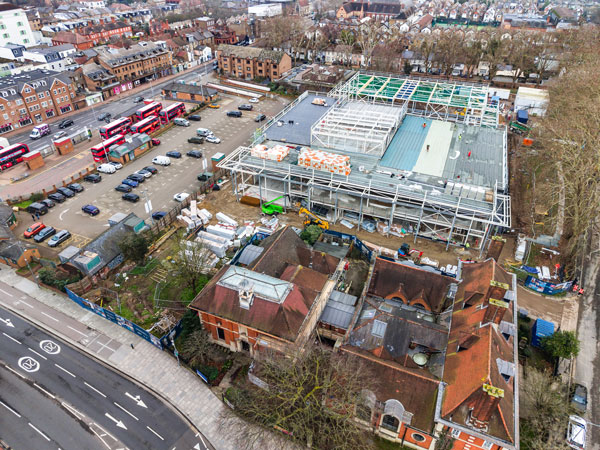
Located along the southern elevation, the aquatics zone (along with the café) takes up approximately half of the ground floor’s footprint. The steel columns and beams around the pools have all been fully galvanized, protecting the sections from the completed aquatic zone’s corrosive atmosphere.
The middle spine of the ground floor accommodates the wet change area, an admin office, reception and the main entrance.
The ground floor’s northern elevation has a soft play area (which is a double-height space located next to the entrance), three studios and a plant room.
The main pool is positioned within a double-height hall, with a series of 25m-long glulam beams, supported on steel columns, forming the roof.
“Sourcing and installing the glulams, each weighing 4.5t, was part of our steelwork package,” explains H Young Structures Managing Director Ian Peachment.
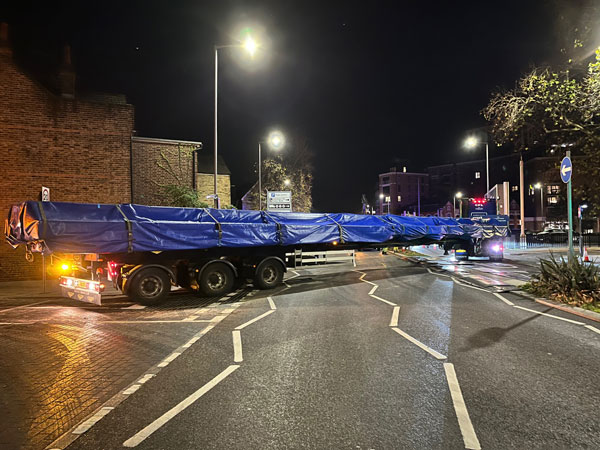
“Transported from Austria, they were then delivered to site at night, under police escorts, and with a road closure and traffic management in place, due to their length.”
The first floor, which wraps around the double-height main pool hall, has a composite design, with steel beams supporting metal decking and a concrete topping.
Commenting on the steel composite flooring solution, Ed Pellow, Furness Associate Director, says using glulam beams to form some of the roofs is viable, but they would not be stiff enough for the leisure centre’s first floor construction.
The first floor’s largest space is the four-court sports hall, which is accommodated along the eastern elevation. It spans over the learner pool, some of the changing rooms and the ground floor plant room.
This double-height space is topped with a series of 20m-long un-spliced glulam beams. Also on this floor, another series of slightly shorter (15m-long) glulams span over the single-storey fitness suite.
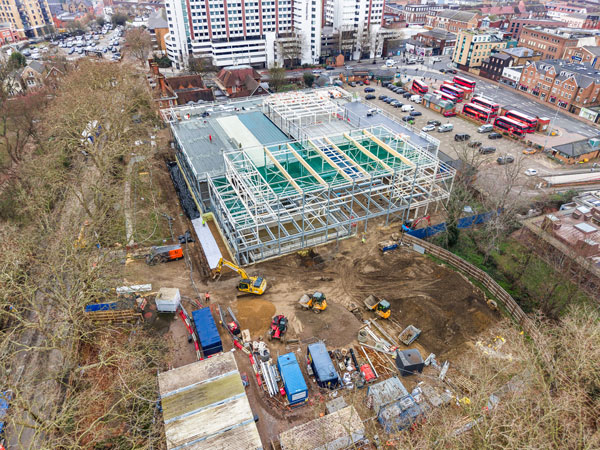
The remainder of the first floor accommodates the dry change area, health spa and squash courts.
Externally, the steel frame forms a canopy along the western elevation, creating a covered area for the main entrance. It will also be incorporated into a new pedestrian route between the leisure centre and the museum and library.
The scheme also includes significant improvements to the surrounding public realm, with enhanced landscaping and an improved play area and wildflower meadows.
The Kingston Leisure Centre is expected to open to the public in Spring 2027.
Galvanizing at Kingston
The exposed steelwork around the swimming pool at Kingston Leisure Centre is within a high-risk corrosion category – unusual for interior steelwork. David Brown of the SCI comments on the galvanized chosen protection system.
The environmental condition of steelwork in many buildings is benign and dry – so innocuous that steel which is not on show can often be left unpainted. A swimming pool environment is towards the other end of the scale, classed according to BS EN ISO 12944-2 as C4 “high” alongside chemical plants and structures immediately next to the sea. Robust protection is required, especially as the steelwork at the Kingston Leisure Centre is visible to the users – unsightly rust staining would be very unwelcome.
The solution at Kingston was to specify the steel to be hot-dip galvanized. This protection system is one of the three identified in a publication by Corus, A corrosion protection guide: For steelwork in indoor swimming pools, which can still be found on the internet. Updated information on appropriate protection systems for swimming pools can be found on www.steelconstruction.info
Careful detailing of the steel items to be galvanized is essential. Hollow sections (and similar voids) must be vented to eliminate the risk of an explosion during the dipping operation. Stiffeners and other welded attachments should have the corners cropped so that the molten zinc can flow around the item and drain, as the steel member is lifted from the bath.
As the galvanizing bath is typically around 450°C to 500°C, immersing an item can relieve residual stresses in fabricated members, which may lead to unwelcome deformations. If a complex welded arrangement with internal restraint is to be galvanized, advice from the company undertaking the process should be obtained.
If a fabricated member is too long for the galvanizing bath (such as a truss), it may be necessary to “double dip” the item – immersing one end and then the other. The difference in temperature between the immersed part of the item and the part not yet coated can similarly lead to unwelcome deformations.
While many are content with the finished aesthetic of galvanized items, decorative coatings can be applied if required. The surface of the galvanized item must be treated before applying the decorative finish. In the harsh environment of a swimming pool, any decorative coating will require inspection and maintenance if the original condition is to be maintained.
For general advice on galvanizing, the website of the Galvanizers Association (galvanizing.org.uk) is a valuable resource. The resources include a map of the UK showing corrosion rates of hot dip galvanizing (for items in an external environment).