Projects and Features
National Finalists – SSDA 2025
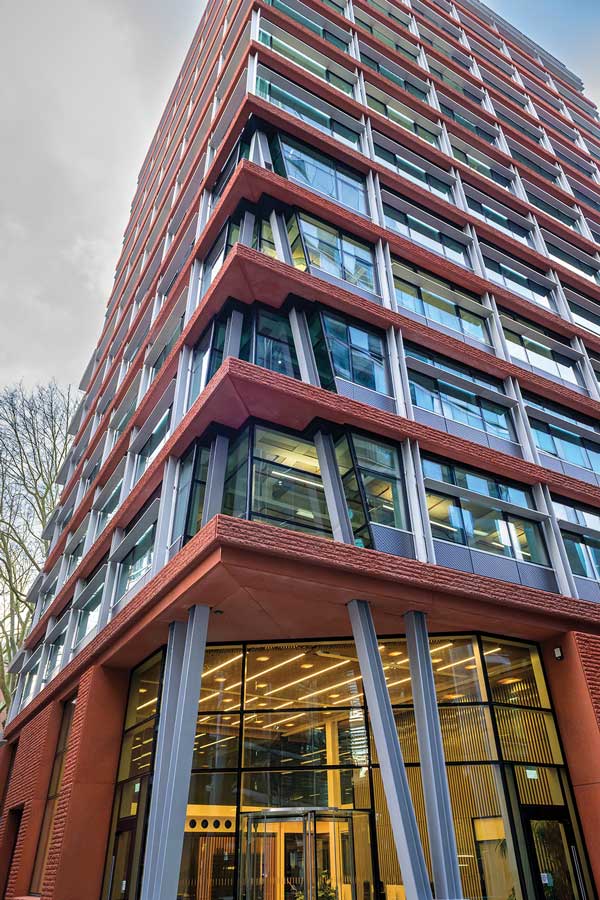
Edenica, 100 Fetter Lane, London
FACT FILE
Architect: Fletcher Priest Architects
Structural engineer: Waterman Group
Steelwork contractor: Bourne Group Ltd
Main contractor: Mace Group
Client: Yard Nine and BauMont Real Estate Capital
Sustainability and the desire to integrate the project into the circular economy took centre stage for the design and construction of the steel-framed Edenica office development at 100 Fetter Lane in the City of London.
Alongside a number of initiatives, the scheme embraced a pioneering concept known as Materials Passports, which describe characteristics of materials and components, giving them value for present use, recovery and future use.
Set over 12 storeys, the main structure consists of steel beams and columns supporting a series of 4.5m × 1.8m precast concrete floor planks.
The planks, internal steelwork, bolted connections, concrete core and building services are all exposed, creating an aesthetically pleasing, modern office building.
Framing the main entrance, a clear column-free space has been formed with two raking steel sections that splay inwards from the underside of level four.
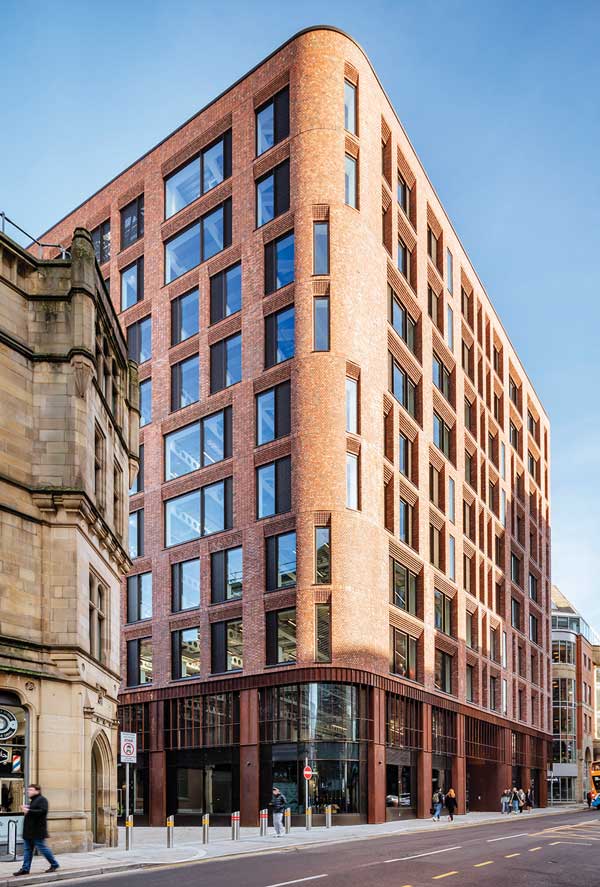
Island, 17-27 John Dalton Street, Manchester
FACT FILE
Architect: Cartwright Pickard
Structural engineer: Curtins
Main contractor: Bowmer and Kirkland
Client: HBD
A nine-storey office development in the heart of Manchester’s business district, Island is a cutting-edge building that required 700t of steelwork.
The BREEAM ‘Excellent’ project was developed to raise the bar for sustainability, achieving net zero carbon for both operational and embodied carbon.
Wrapped around a reinforced concrete core, the main frame features Westok cellular beams throughout (used to integrate building services within their depth). The beams are all left exposed in the completed scheme, creating a modern industrial-looking interior.
The beams support a metal decking and a concrete topping to form a composite flooring solution.
High-efficiency ventilation systems, enhanced insulation and rooftop solar photovoltaic panels contributed to the building’s sustainability credentials. The incorporation of offsite manufacturing techniques is said to have significantly reduced onsite emissions and construction waste, further minimising the project’s environmental footprint.
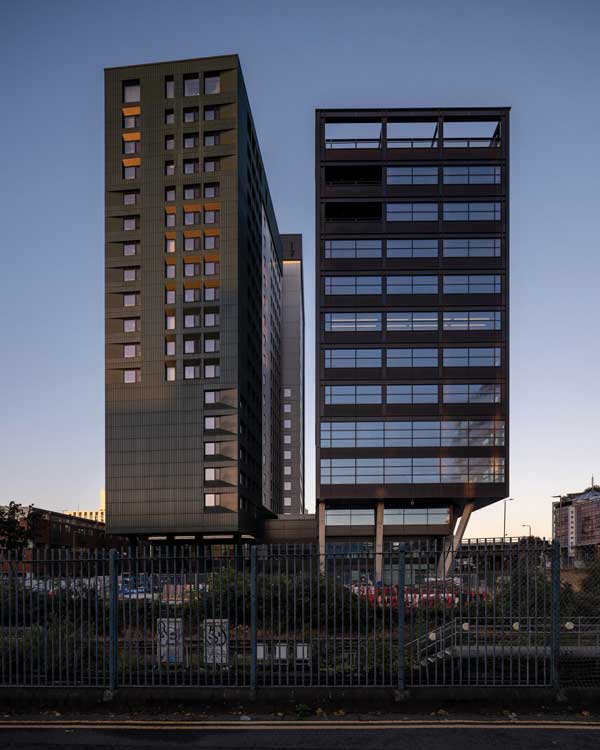
Palmerston Court, London
FACT FILE
Architect: Alford Hall Monaghan Morris
Structural engineer: Walsh
Steelwork contractor: William Hare Limited
Main contractor: Mace Group
Client: Urbanest
The 11-storey Palmerston Court scheme in Battersea is said to exemplify the efficiency and sustainability of structural steelwork in delivering high-quality commercial office space.
Arranged around a concrete core, the steel frame includes ten commercial office levels (with minimal internal columns), sitting above the double-height entrance lobby at ground floor.
Concrete encased steel raking columns, frame the podium entrances and act as the primary support structure for the upper floors of the building.
On the eastern elevation, a large shared roof space and smaller terraces (located on the uppermost floors) provide unobstructed views of central London.
The client says structural steelwork was chosen due to its lower weight compared to other materials and because of the ease of its installation, especially on a confined site.
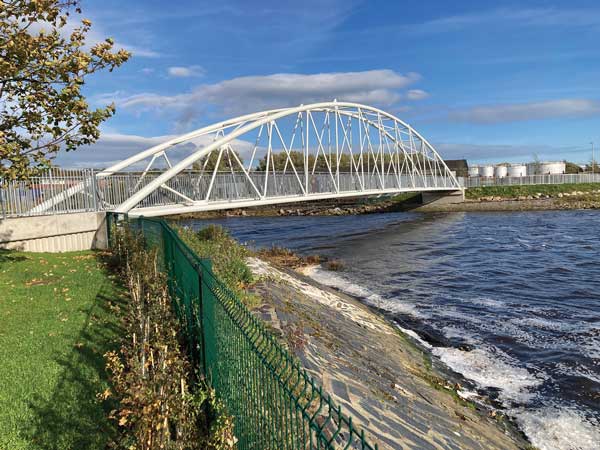
Pennyburn Bridge, Northern Ireland
FACT FILE
Architect: Design ID Consulting Limited
Architect: McAdam Design
Structural engineer: Structural Design and Detailing Ltd
Steelwork contractor: M. Hasson & Sons Ltd
Main contractor: FP McCann
Client: Derry City & Strabane District Council
Spanning the River Foyle, the 63m-long Pennyburn Bridge forms part of an important walking and cycling route, as well as linking two parts of Derry city.
For ease of delivery, the steel bridge was fabricated in eight large, fully-welded sections (five deck and three roof sections).
All of the sections included bolted end connections that made onsite assembly of the bridge quick and efficient.
During the fabrication process, temporary jigs were used to help maintain the exact geometry of the bridge beams, which have curved top and bottom chords and lean inboard by nine degrees.
Once the eight sections had been assembled onsite, a 1,000t-capacity crane was used to lift the entire structure into its final position over the river.
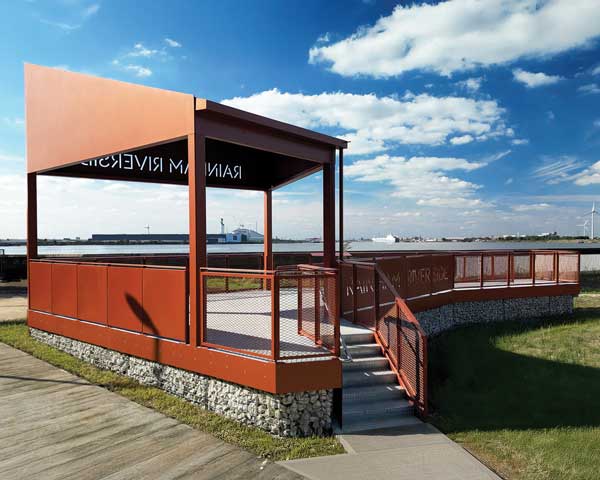
The Rainham Riverside Belvedere, London
FACT FILE
Architect: Untitled Practice
Structural engineer: Flow Structures
Main contractor: Borras Construction Ltd
Client: London Riverside BID
Providing sheltered seating for people to relax and take in the views across the River Thames, the Rainham Riverside Belvedere is a landmark structure on a former industrial site.
The structure showcases many types of steelwork in its coordinated design, including universal sections, flat plate and durbar sheet, expanded metal lath, and perforated and laser-cut sheet.
Designed using 3D modelling, the structure consists of a wooden deck, topped by a roof formed from steel sheets, which are stiffened around the perimeter to prevent wind uplift. The in-plane stiffness of the sheets stabilises the roof and avoids the need for cross bracing, which would obstruct views from inside the structure.
The roof is supported by slender hollow section cantilever columns. The steelwork’s connections are made with aesthetically pleasing countersunk fixings.
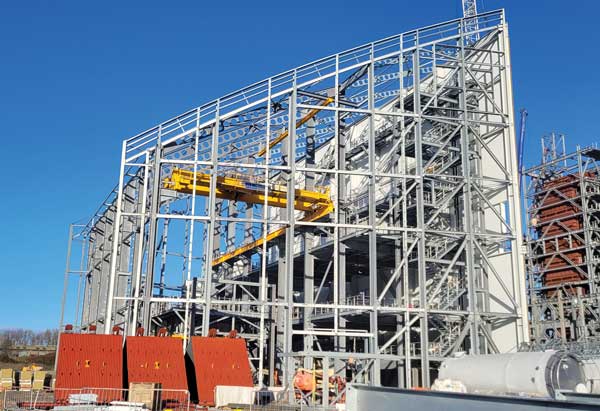
Skelton Grange EfW, Leeds
FACT FILE
Architect: Weedon Architects Limited
Structural engineer: Doran Consulting
Steelwork contractor: Billington Structures Limited
Main contractor: Kanadevia Inova AG
Client: enfinium Skelton Grange Limited
Located on a disused industrial site in Leeds, Skelton Grange EfW will process up to 410,000t of waste annually, generating electricity for over 100,000 homes.
The project aims to reduce the reliance on landfill, recover valuable materials and support the region’s net zero targets over the next 15 years.
Structural steelwork’s lightweight and high-strength properties made it the ideal material to provide the required long-span buildings that house the site’s processing equipment.
Because of the continuous operation of the facility, some complex structural designs had to be incorporated into the steel frame, such as fatigue-resistant connections.
One of the main challenges was coordinating the steelwork erection around the installation of the process equipment. Flexible sequencing was required, along with large amounts of temporary supports, which allowed structures to remain incomplete while other trades finished their work.